
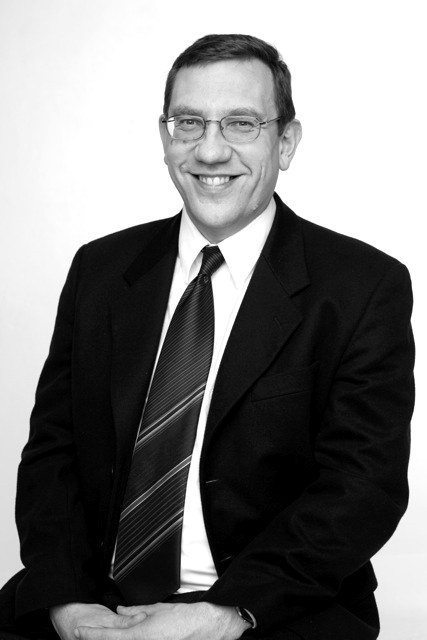
About me
Engineer, salesman, entrepreneur, recruitment advisor and author. Two souls in one breast – and both have to do with people and technology.
Career at a glance
Today
- Recruitment advisor to industrial and technology companies
- Author“Geheimsache Recruiting”, published in German in January 2027
Before
- Founder and managing director, Linnamägi Executive SearchCologne and Tartu, from 2005
- Sales engineer, security technologyRAG group, later Bosch Security Systems, from 2000
- Co-founder of a used car businessexporting to Estonia and Russia, 1990s
- Electrical engineering (Diplom-Ingenieur) and business administrationRWTH Aachen University, student research project at KTH Stockholm
Education
“Two souls, alas, are dwelling in my breast,” Goethe has his Faust say. Two souls live in my breast, too. The heroes of my childhood were Captain James T. Kirk of the Starship Enterprise and Scrooge McDuck – an odd combination, but one that neatly illustrates my fascination with technology and my enthusiasm for business.
After finishing school, I wavered between studying electrical engineering and economics, and decided on electrical engineering at RWTH Aachen University. After my intermediate exams, business tempted me again, so I also began studying business administration on the side. I completed my engineering degree as a Diplom-Ingenieur. In business administration, I picked the lectures that really interested me and were useful for my practical work.
At the same time, I built up a used car business with various partners, selling cars in Germany and exporting them to Estonia and Russia. In the 1990s, that was something of a licence to print money. I learned more about sales there than at university. I believe there is hardly a field in which you can learn more about how sales works in practice than in the car trade.
It became ever clearer that technical sales, industrial marketing and business development are among my great passions. They combine business and technology in an ideal way.
Employment
The car trade was a good way to earn money. But money isn’t everything, and at some point I got bored. I remembered that I had studied electrical engineering, after all, and applied for interesting positions in technical sales. In 2000, I started as a sales engineer at a security technology company in Aachen that belonged to the RAG group.
The products were absolutely first-class. One system, developed specifically for airports, was so complex that there was only one competitor worldwide that had mastered the technology: Honeywell in the United States. Our customers included banks, large corporations, airports, museums, nuclear power plants and facilities so secret that they do not appear on any map.
The company also had a unique flair. Our managing director had previously worked in Silicon Valley for several years. The combination of the down-to-earth camaraderie of the Ruhr region within the RAG group and our managing director’s Silicon Valley spirit was simply stunning. There was such a sense of new beginnings that every Monday I was glad the weekend was over and I could finally get back to the office.
Over the years, I was involved in everything there is in sales and marketing: new customer acquisition, trade fairs, key account management, business development, marketing strategies, technical articles, shaping opinion in the industry and working with advertising agencies.
In the course of a large-scale restructuring, we were sold to Bosch Sicherheitssysteme GmbH. Bosch is a great company, and head of marketing at Bosch would certainly have been a dream job for me. Unfortunately, Bosch Sicherheitssysteme GmbH already had a head of marketing.
And that’s just how it is: when you work for a large, renowned company and your name appears under articles in trade journals, a headhunter calls from time to time. So one day I found myself in the office of one of our biggest competitors, negotiating with the HR director about a position as “Global Product Manager Access Control”.
The search was being handled by one of the largest and – to this day – most renowned executive search firms in Germany. After the interview, I talked with the consultant for a long time. He explained the problems search firms face when they have to fill positions for highly qualified specialists and managers in technical and industrial settings. I was amazed by the gap between how the industry presents itself and what really goes on behind the scenes. I saw an interesting business opportunity – and decided to move into executive search.
Executive search
In 2005, I founded my own executive search firm in Cologne. At first, it focused on finding specialists and managers for other search consultants. During this phase, that consultant was not only my first client but also my mentor, from whom I learned the business from the ground up. My next clients came through his recommendations. Later, I actively sold my services and won other search consultants as clients.
Later on, I teamed up with an experienced consultant who had previously worked for many years at large international HR service providers. We hired staff, opened another office in Estonia and worked directly for well-known industrial companies.
One of the biggest problems in filling demanding specialist and management positions in technical and industrial settings – but also in fields such as finance, legal or medical – is that very few recruiters have expertise and relevant professional experience in these areas. As a result, they can only understand the particular features and challenges of a position up to a certain depth. In many cases, that is not enough to create a convincing recruitment marketing concept or to talk to candidates as equals.
This is exactly where our great strength lay. My training as an engineer and my many years of experience in technical sales at a high-tech company allowed me not only to grasp what was special about a position, but also to advise my clients on the strategic direction of their company’s development – so that the strategy and the people who are to implement it fit together perfectly.
Experience
With a few exceptions, our focus was on industrial and technology companies. We worked directly for many well-known industrial companies and also supported other search consultants in filling their assignments: from development engineers to managing directors and site managers in Switzerland.
Sectors
- Aerospace
- Automotive
- Building services
- Building technology and fit-out
- Chemicals
- Consumer goods (FMCG)
- Electrical engineering
- Finance
- Food
- Healthcare
- IT
- Mechanical engineering
- Plant engineering
- Rail technology
- Services
- Textiles
Functions
- Continuous improvement
- Customer service
- Design
- Export
- General management
- Hardware development
- Human resources
- IT administration
- Logistics
- Manufacturing
- Marketing
- Product management
- Purchasing
- Quality assurance
- Sales
- Software development
Author and advisor
They say you should stop when you’re at your best. But who actually does?
For our industry, the coronavirus pandemic meant an enforced break. And a break always means time to think. I remembered my great passion for books and began to read a lot. At some point, even reading became too boring, and I began to think about writing a book myself.
In countless conversations with clients and candidates, it had become clear to me again and again that knowledge of how recruiting actually works is often patchy and shaped by assumptions that circulate in public but frequently do not match reality.
It is precisely these assumptions that often mean the collaboration between hiring managers – that is, managers who hire staff – and recruiters does not run as well as it could, and that even attractive positions remain vacant. They are also the cause of job seekers’ widespread frustration with recruiters.
So how about a book that describes recruiting as it really is? One that gives hiring managers a tool to improve their collaboration with recruiters and significantly increase their chances of actually filling vacancies? And what if job seekers also understood how the recruiting industry and its processes really work? That would not only reduce a lot of frustration with recruiters but also help job seekers improve their applications and their chances of landing a new job.
I started on the first drafts. In the process, I learned that writing a book works much like software development: the first 90 per cent of the time is spent writing the book, the other 90 per cent eliminating the mistakes, and the remaining 90 per cent getting it published.
Today, years later, the book is finished, and I hope it finds many enthusiastic readers. It is published in German. I already have ideas for more books.
But just writing books would bore me in the long run. I love working with people, solving tricky problems and supporting industrial and technology companies in their development. That is why I continue to work as a recruitment advisor for selected companies, today in a purely advisory role: I help you set up your recruiting so that your vacancies in development, manufacturing, quality assurance, purchasing, sales and marketing get filled – with your own recruiters or with external partners whom I select and manage together with you.
If you are looking for support with this, please get in touch.